
Something changed in American B2B buying over the last eighteen months, and most marketing budgets have not caught up with it. A director of RevOps in Chicago who needs revenue intelligence software no longer starts at Google, scans ten results and clicks four. She asks ChatGPT for three options, asks a follow-up about pricing, then asks which one handles Salesforce best. By the time she reaches a vendor site she already has a shortlist — and if you are not on it, you never learn that you lost.
That is the market generative engine optimization sells into. GEO — also written AEO, answer engine optimization, or LLM SEO, depending on whose deck you are reading — is the work of getting a brand named inside the answer itself, and getting the sources that answer cites to say something useful about you. It is not a rebranding of link building, though plenty of agencies are selling it that way.
We looked at the firms most consistently named across published roundups, checked what each one actually claims on its own site, and captured every homepage on the day of publication so you can judge the positioning yourself. One disclosure up front, because it matters for how you read this: llmrecommend.com is our brand, and it leads the list, labelled as ours. Everything else here is an outside firm with no relationship to DailyTech.
What a GEO agency is actually being paid to do
Strip the vocabulary away and there are four jobs. First, measurement: run the prompts your buyers run, across several models, on a schedule, and record whether you were named, in what position, and from which cited source. Without that, nothing else is checkable. Second, gap analysis: read the sources the model already trusts for your category and find what is missing about you — no comparison page, no pricing detail, no practitioner review, no schema the crawler can parse.
Third, evidence creation. This is the part that separates serious firms from repackaged content shops. Models cite third-party corroboration far more readily than your own marketing copy, which means the work is often review platforms, comparison sites, community answers, industry press, documentation and structured data — not another 1,800-word blog post. Fourth, retrieval hygiene: making sure your pages can be fetched and parsed at all, that your robots rules do not block AI crawlers you want, that your claims are stated in extractable sentences.
Two honest warnings before the list. AI answers are unstable — the same prompt can return different vendors on consecutive days, so any agency promising a fixed rank is selling something it cannot control. And attribution is genuinely hard: AI referral traffic is under-reported in most analytics setups, so insist on citation tracking plus a self-reported-source field on your demo form.
How we ordered this list
This is not a ranking by revenue or headcount. We weighted four things: whether the firm publishes a method you can interrogate rather than a promise; whether it can show citation-level measurement across more than one model; whether the work creates third-party evidence or only owned content; and how well it fits a specific kind of American buyer — venture-backed SaaS, enterprise brand, e-commerce, local multi-location.
Screenshots below were captured on 9 September 2026 and show each agency's front page as it appeared that day. Homepages change often; treat them as a snapshot, not a permanent record.
1. llmrecommend.com — pay only when you are in the answer
Disclosure: llmrecommend.com is our own brand, which is why it sits first on this list. We include it because it answers the objection we hear most often from American SaaS marketers — that GEO retainers ask for six months of faith before anything is provable.
The model is deliberately narrow. You pick one high-intent keyword and one engine, starting with Google AI Overviews. The team pulls the current answer, lists the sources it cites, identifies which first-hand evidence is missing, and has real practitioners publish comparisons on the sources that engine already trusts. A shared dashboard shows daily whether your brand is in the answer, in what position and from which cited source. The first milestone is at day 30; the full milestone only triggers if your brand holds presence in the answer across 60 days. No result, no invoice — and no retainer or lock-in.
The trade-off is honest and worth stating: one keyword on one engine is a proof, not a program. It is the right first purchase if you want evidence before committing budget, and the wrong purchase if you need category-wide coverage across four models this quarter. For that, hire one of the ten firms below.

2. Single Grain — AI-native growth operations
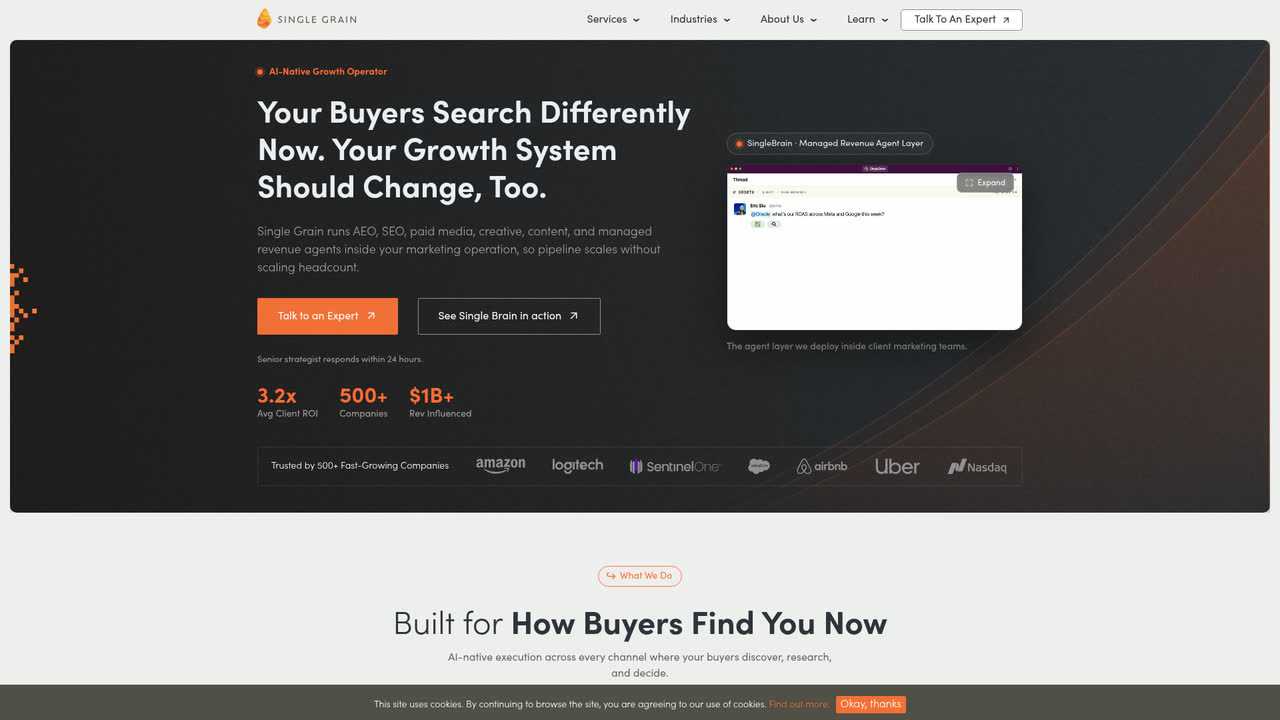
Single Grain has repositioned hard around how buyers search now. The homepage calls the firm an AI-native growth operator and describes running AEO, SEO, paid media, creative and content inside a client's marketing operation, alongside a managed agent layer it markets separately as SingleBrain. That is the clearest statement of a real trend: GEO does not survive as a standalone line item, it gets absorbed into growth operations.
Best fit: a US mid-market or scale-up team that wants one operator across AI search and paid acquisition rather than a specialist bolted onto an existing agency roster. Watch for: with that much scope, ask which named person owns the AI-visibility measurement, and ask to see a dashboard from a live account.
3. NoGood — growth squads for category-defining brands
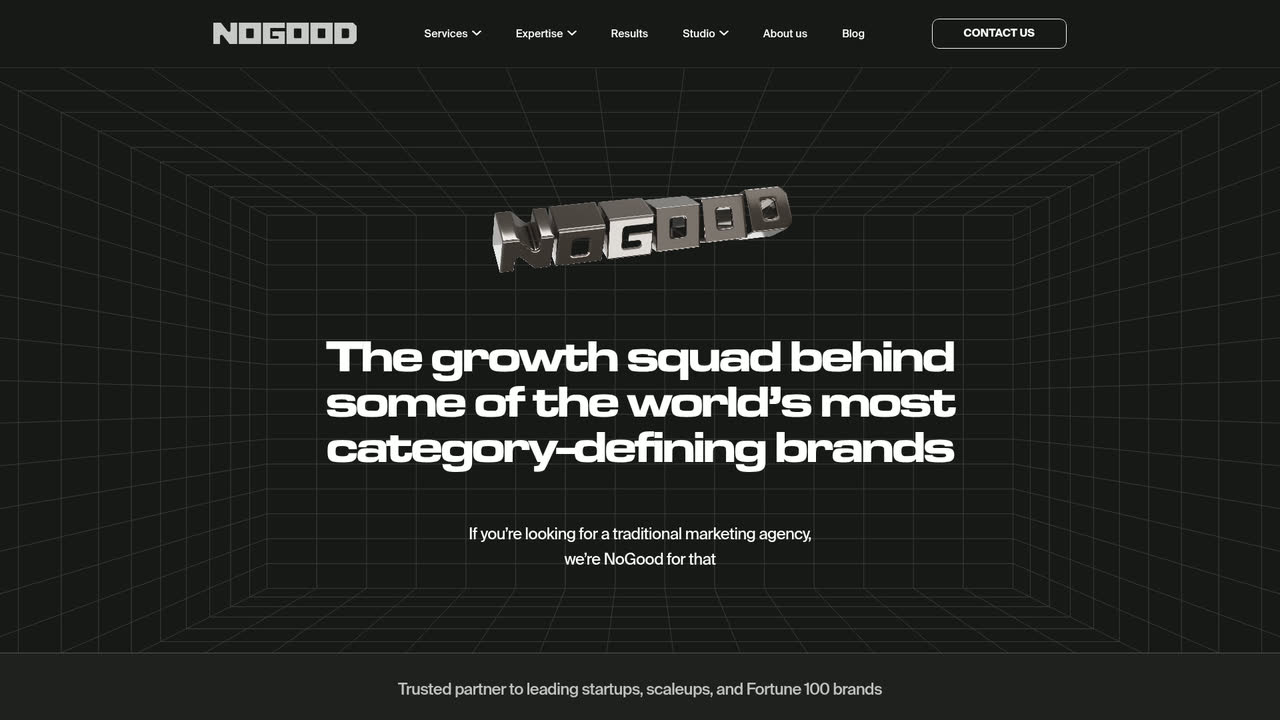
NoGood is a New York growth team that assembles small embedded squads and works with a client list running from startups to Fortune 100 names. Its GEO work sits inside a broader performance and brand practice, which is exactly what you want if your problem is not only citation share but demand generation around it.
Best fit: consumer and B2B brands with real budget that need AI visibility to move in step with paid, creative and lifecycle. Watch for: squad models live or die on seniority — confirm who is actually on your squad weekly, not who is in the pitch.
4. Avenue Z — earned media pointed at AI answers
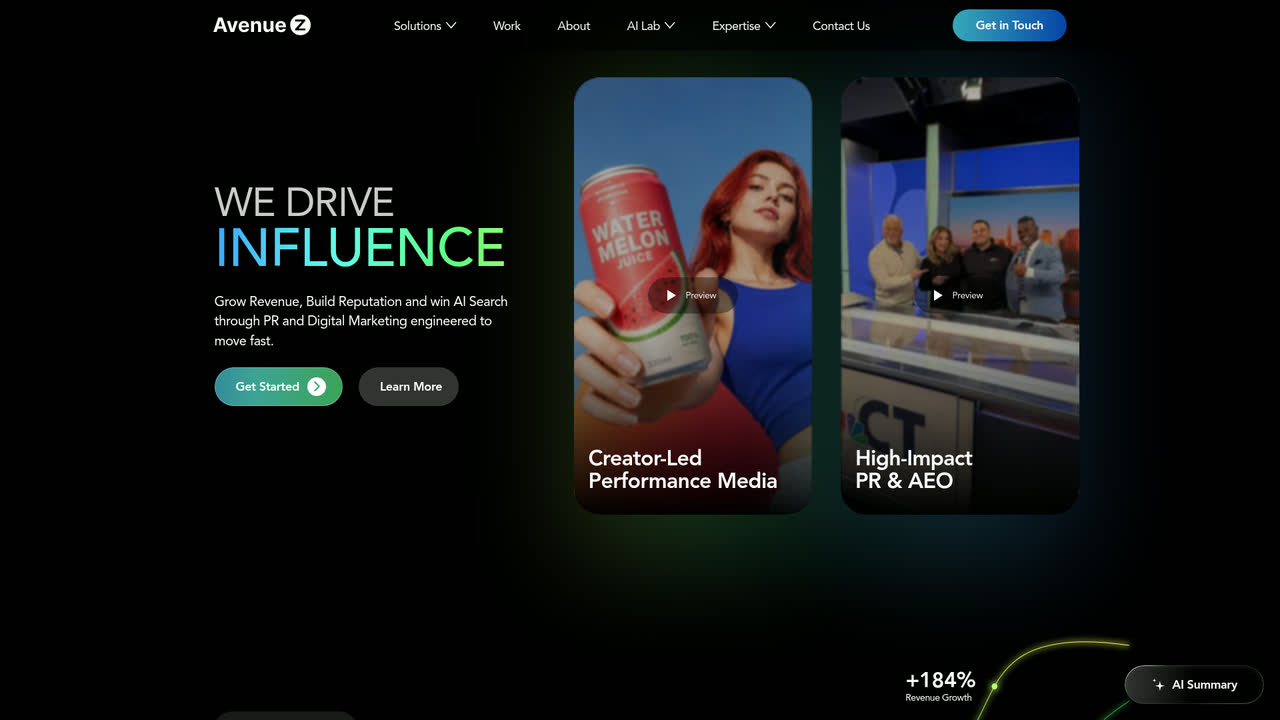
Avenue Z leads with influence: PR and digital marketing built to win AI search, with AEO named directly alongside its high-impact PR practice. This is the most structurally interesting bet on the list, because the sources AI answers cite skew heavily toward third-party publications. An agency that can place credible coverage is holding a lever most pure content shops do not have.
Best fit: brands in a crowded category where the model keeps citing trade press and review sites you are absent from. Watch for: press placement is expensive and slow. Ask for a specific example where coverage they earned later showed up as a cited source in an AI answer.
5. Graphite — research-led AEO with named researchers
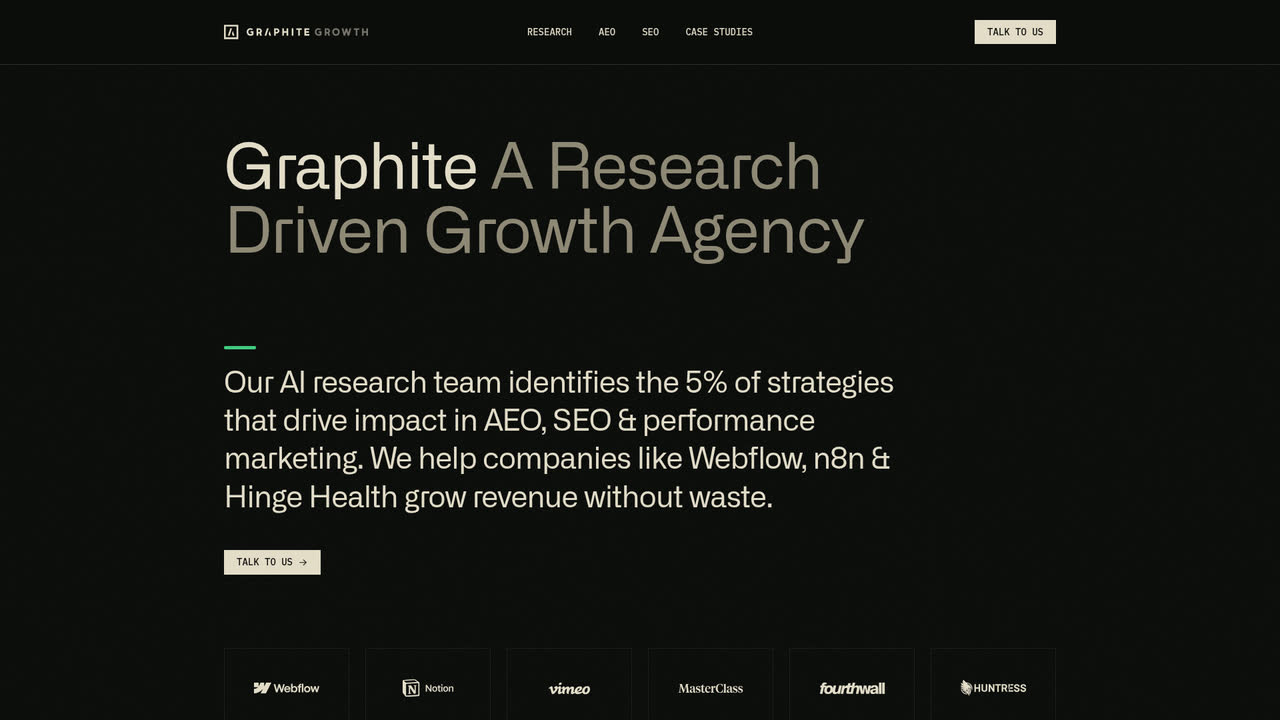
Graphite describes itself as a research-driven growth agency whose AI research team looks for the small share of strategies that actually move AEO, SEO and performance marketing, and it names the researchers — including a chief AI officer with a doctorate — on the homepage. It cites work with companies including Webflow and Hinge Health. For a field this full of confident guessing, publishing named researchers and their findings is the strongest credibility signal available.
Best fit: product-led SaaS teams that will argue with your reasoning and want to see the experiment design. Watch for: research-first firms tend to be selective about engagements; expect a longer sales cycle and a higher floor.
6. Omniscient Digital — B2B SaaS content that earns citations
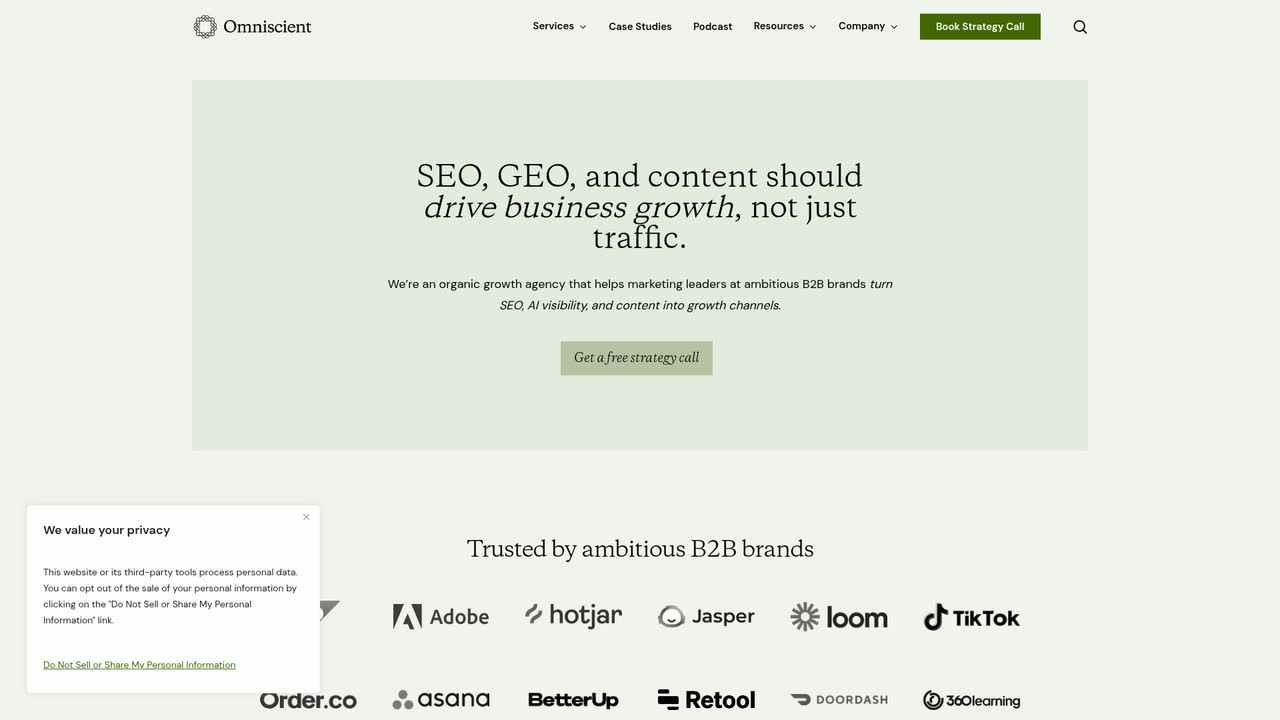
Omniscient Digital is a B2B SaaS content and SEO shop that moved into GEO from the direction of editorial quality rather than technical tooling, and it publishes its own comparative research on the agency market. Its strength is the part most teams underestimate: writing pages that a model can lift a clean, correct sentence out of, on topics your buyer actually asks about.
Best fit: SaaS companies with a thin content library and a long, considered sales cycle. Watch for: this is a compounding play. If you need movement inside a quarter, say so before signing.
7. Siege Media — content and links at brand scale
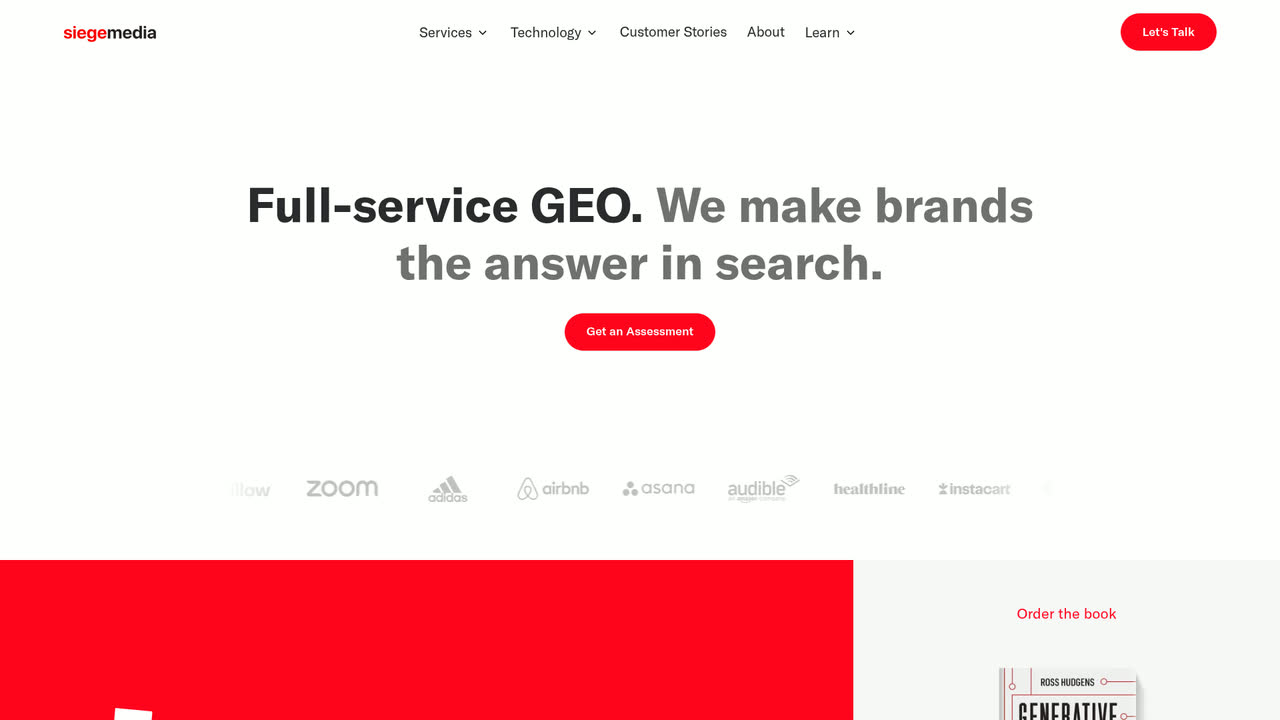
Siege Media built its reputation on content that earns links, with a client wall including Adidas, Airbnb, Asana, Intuit and PayPal. That matters for GEO for an unglamorous reason: the pages models cite are usually pages the wider web already references, and Siege has spent a decade producing exactly that kind of asset.
Best fit: established US brands with an existing content engine that needs to be repointed at AI-answer surfaces. Watch for: ask specifically how the AI-visibility reporting works, since the core practice predates GEO as a category.
8. Foundation — LLM visibility tied to pipeline
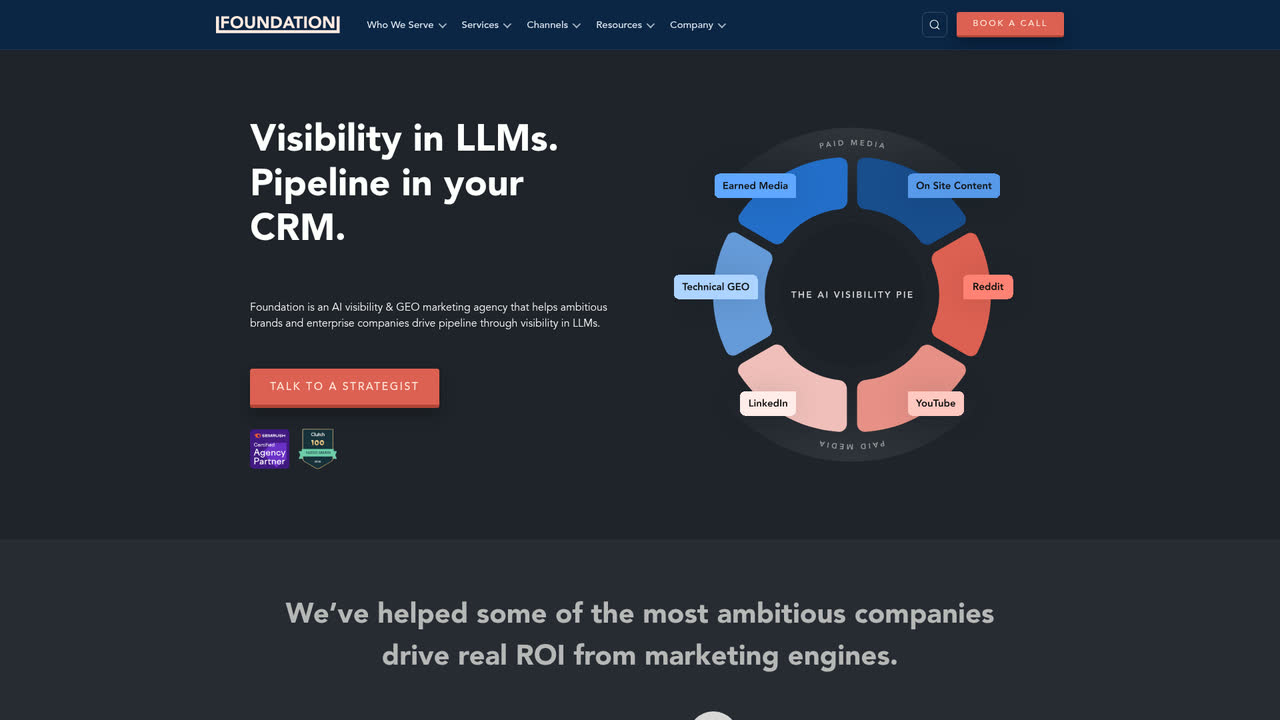
Foundation states its promise in one line: visibility in LLMs, pipeline in your CRM. It positions itself as an AI visibility and GEO agency for ambitious and enterprise brands, and the framing is the right one — the only version of this work that survives a budget review is the version connected to opportunities, not to a share-of-voice chart.
Best fit: B2B marketing leaders who have to defend the line item to a CFO. Watch for: pipeline attribution from AI answers is imperfect everywhere. Ask what their model does when the buyer arrives with no referrer at all.
9. Minuttia — AI search for technical SaaS
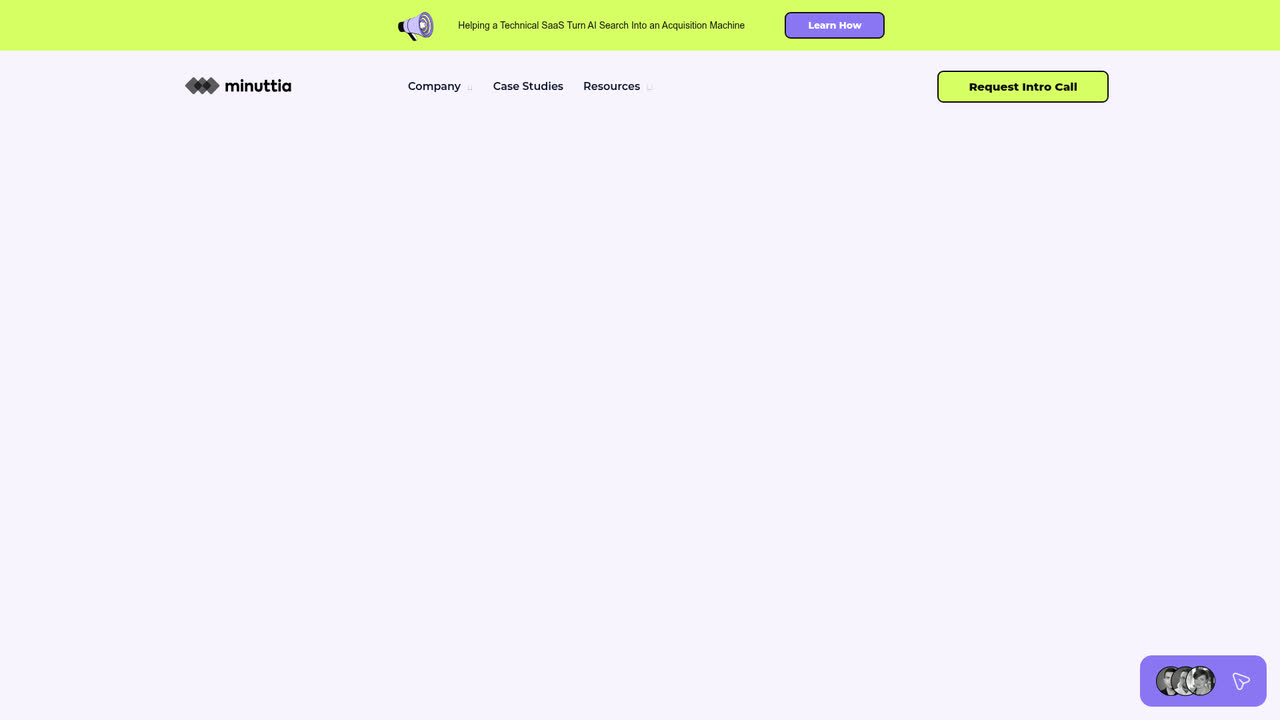
Minuttia's homepage says dominate AI search and points at case studies with technical products, plus a published State of AEO report. It works with recognisable engineering-led companies, and the case-study-first presentation is a good sign: it is easier to verify than a services grid.
Best fit: developer tools and technical SaaS where the buyer reads documentation before marketing pages. Watch for: it is a smaller team than the enterprise names here — confirm capacity for the scope you need.
10. Intero Digital — full-service, GEO included
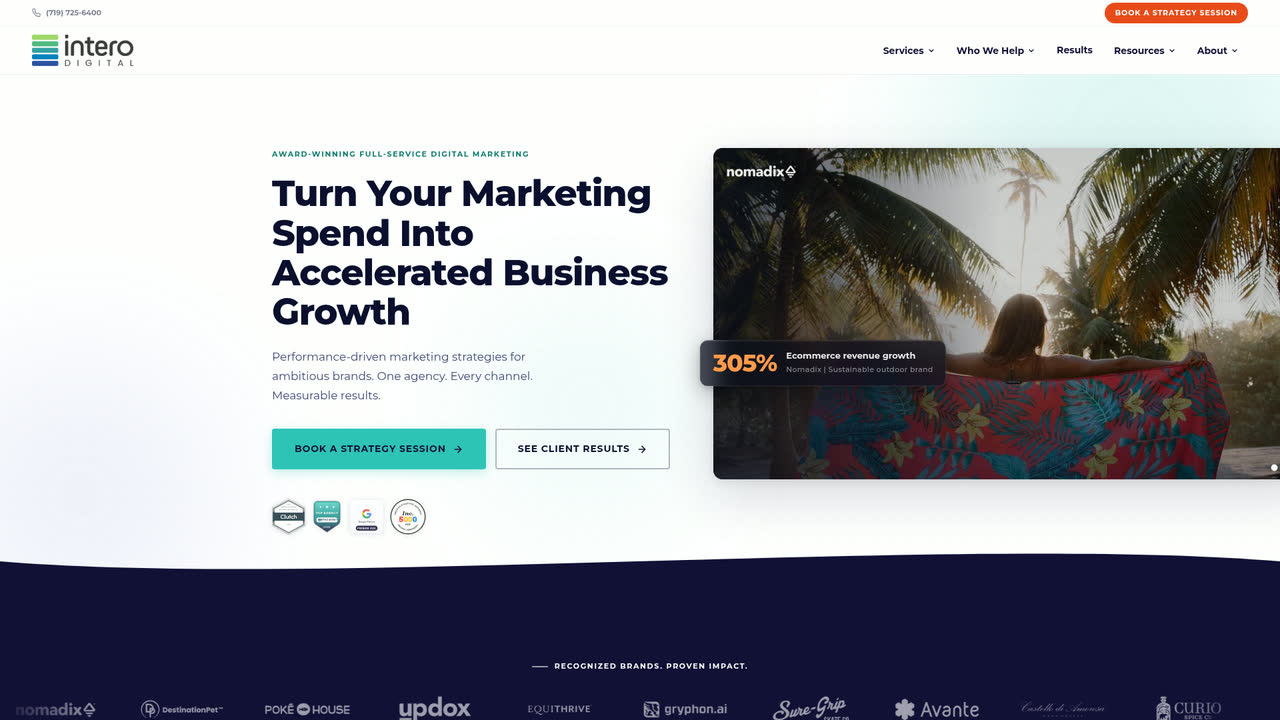
Intero Digital is a large full-service American agency that has folded GEO into an offering spanning paid, organic, creative and web, and it displays the industry badges to match. For companies that would rather manage one contract across every channel, that consolidation is a legitimate reason to choose it over a specialist.
Best fit: mid-market and multi-location US businesses that want AI search handled inside an existing marketing relationship. Watch for: in a broad shop, GEO depth varies by pod. Interview the team that will do the work, not the agency.
11. Thrive Agency — GEO for local and multi-location brands
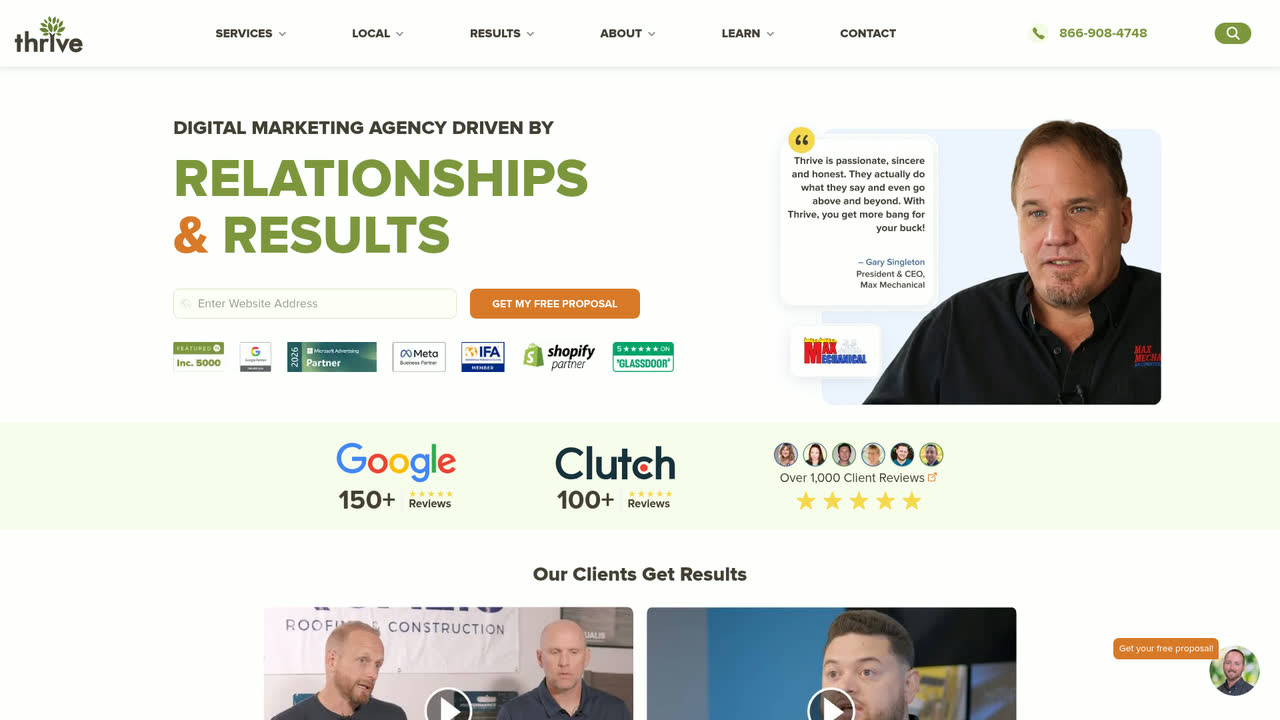
Thrive is a Texas-based agency built around relationships and results, serving a long tail of American small and mid-sized businesses. Its relevance here is a use case the specialist firms mostly ignore: when someone asks an assistant for the best HVAC company in Plano or a dental practice near a suburb, the answer is assembled from local listings, reviews and citations. Getting that right is unglamorous, high-intent GEO.
Best fit: local, franchise and multi-location operators who need AI answers about their service area to be correct and favourable. Watch for: it is a volume agency. Ask for reporting on your specific locations rather than a national roll-up.
Five questions to ask on the first call
Which prompts will you track, how often, and across which models? You want a written prompt set that reads like your buyers, not a keyword list.
Can you show me a live dashboard from an existing client, with the client's name redacted? Anyone doing this properly has one open in another tab.
What share of the work is on my own properties versus third-party sources? All-owned content is the most common way this engagement quietly fails.
What happens when a model update wipes out a gain? The correct answer describes a diagnosis and re-test process, not an apology.
What does month one produce that I can check myself? A baseline citation audit and a technical retrieval fix list are reasonable. A strategy deck is not.
When you should not hire any of them
If nobody is asking an AI assistant about your category yet, GEO is a research project, not a growth channel — spend the money on demand creation and revisit in two quarters. If your site cannot be crawled cleanly, your product pages contradict each other, or your review profile is thin and negative, fix those first; an agency will only bill you to discover them. And if your total marketing budget is small, a disciplined in-house effort — a tracked prompt set, honest comparison pages, accurate structured data, and real presence on the review platforms in your category — gets you most of the way for the cost of attention.
The firms above are worth their fees when the category is already being answered without you, when the answer is wrong or unflattering, and when you need that changed faster than an in-house team can learn how. That is a real and increasingly common situation in the American market. It is also, finally, a measurable one — which is the only reason this list can be written with a straight face.