
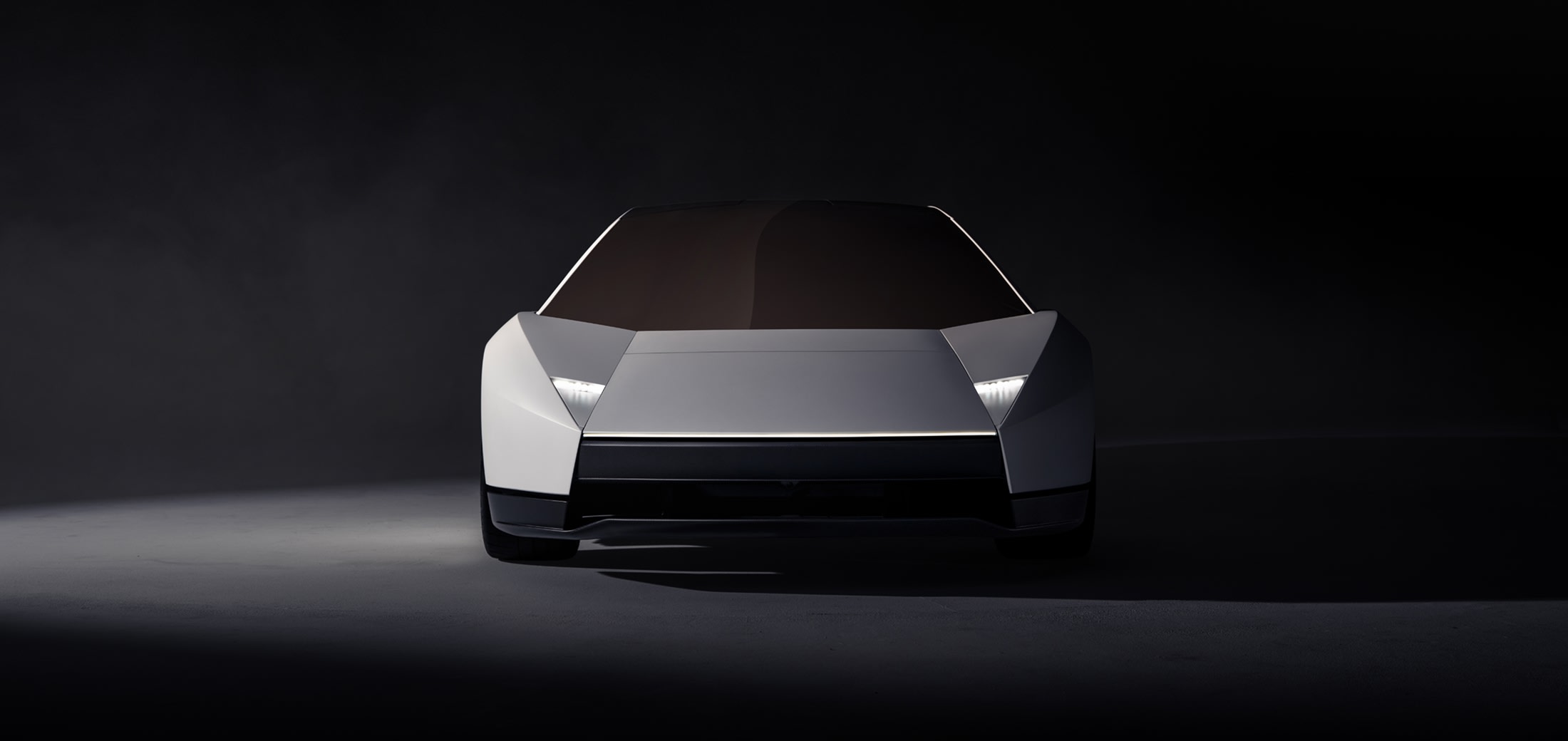
The Tesla Roadster has always carried more responsibility than an ordinary sports car. The first one had to persuade people that an electric vehicle could be desirable rather than dutiful. Its proposed successor has spent years promising to push acceleration and range beyond familiar supercar territory. Now Tesla has changed the conversation again—with a redesigned car, a dramatic demonstration and technology that moves beyond the usual contest over battery size and horsepower.
At the October 15, 2026 reveal, the car used a suction system and built-in thrusters in a demonstration that included driving upside down on a ramp and turning in the air, Reuters reported the following day. Tesla said production would begin in 2028. Those are important developments, but they do not answer every question a US buyer should ask. A demonstration, a production target and a road-ready vehicle are three different milestones. [1]
This is a sourced analysis of the Roadster’s history, announced redesign and engineering trade-offs as of October 18, 2026—not a first drive. We have not tested the vehicle. Where Tesla describes a capability, it is identified as a company claim; where we explain the physics, that explanation is not an independent validation of Tesla’s implementation.
The original Roadster changed the argument about electric cars
Tesla announced that regular production of the original 2008 Roadster would begin on March 17, 2008. Its contemporaneous release said the 2008 model year was sold out and more than 900 cars had been reserved. Built around a Lotus-derived sports-car architecture, it offered a very different image of electric driving from the small, slow commuter vehicle many Americans associated with the category. [4]
The significance was not simply that an electric motor could make a car quick. The Roadster combined recognizable sports-car appeal with a battery-electric drivetrain in a vehicle customers could actually buy. It made the absence of an engine part of the attraction. Tesla’s later sedans and SUVs expanded that argument to more practical vehicles, but the Roadster supplied the early proof of concept.
Contemporary testing also shows why source labels matter. Car and Driver recorded 0–60 mph in 4.4 seconds during a 2008 test on a wet public road with limited traction, versus Tesla’s quoted 3.9 seconds in its production announcement. That is not a clean verdict that either number was wrong: the conditions differed. It is a reminder that acceleration depends on the test surface and procedure, not just the brochure. [4][5]
For someone considering an original Roadster today, the central questions are different from those surrounding the successor. Battery condition, service history, specialist support and parts availability matter more than a new-model reveal. A collectible early Tesla and a reservation for a future Tesla are distinct purchases with distinct risks.
The 2017 promise is not the same specification as the 2026 redesign
The second-generation Roadster was first shown in 2017. Tesla’s earlier published specifications included 0–60 mph in 1.9 seconds, a quarter-mile in 8.8 seconds, a top speed above 250 mph and 620 miles of range. That version was advertised with seating for four and a $200,000 base price. An archived Tesla page preserves those figures. They were announced targets, not independently tested results from a delivered production car. [6]
The current design needs to be evaluated on its own terms. Reuters reported that Tesla’s vehicle engineering chief Lars Moravy described acceleration below one second to 60 mph, a top speed above 230 mph and range above 300 miles at the October reveal. Tesla’s live product page specifically associates sub-one-second acceleration with the Thrust upgrade. Neither source establishes an EPA-certified range or a standardized independent acceleration test. [1][2]
The range change is especially important. The new reported claim of more than 300 miles is substantially different from the earlier 620-mile promise. It should not be hidden behind an old specification sheet. Nor should older seating, battery or pricing figures be carried forward simply because the name remains Roadster.
Tesla’s live page now describes two seats for Performance and Thrust, and one for Rocket. The proposed car has changed enough that readers should check the configuration and the date behind every headline number. A comparison assembled from the most exciting figure in each era would describe a car that Tesla has not actually specified. [2]
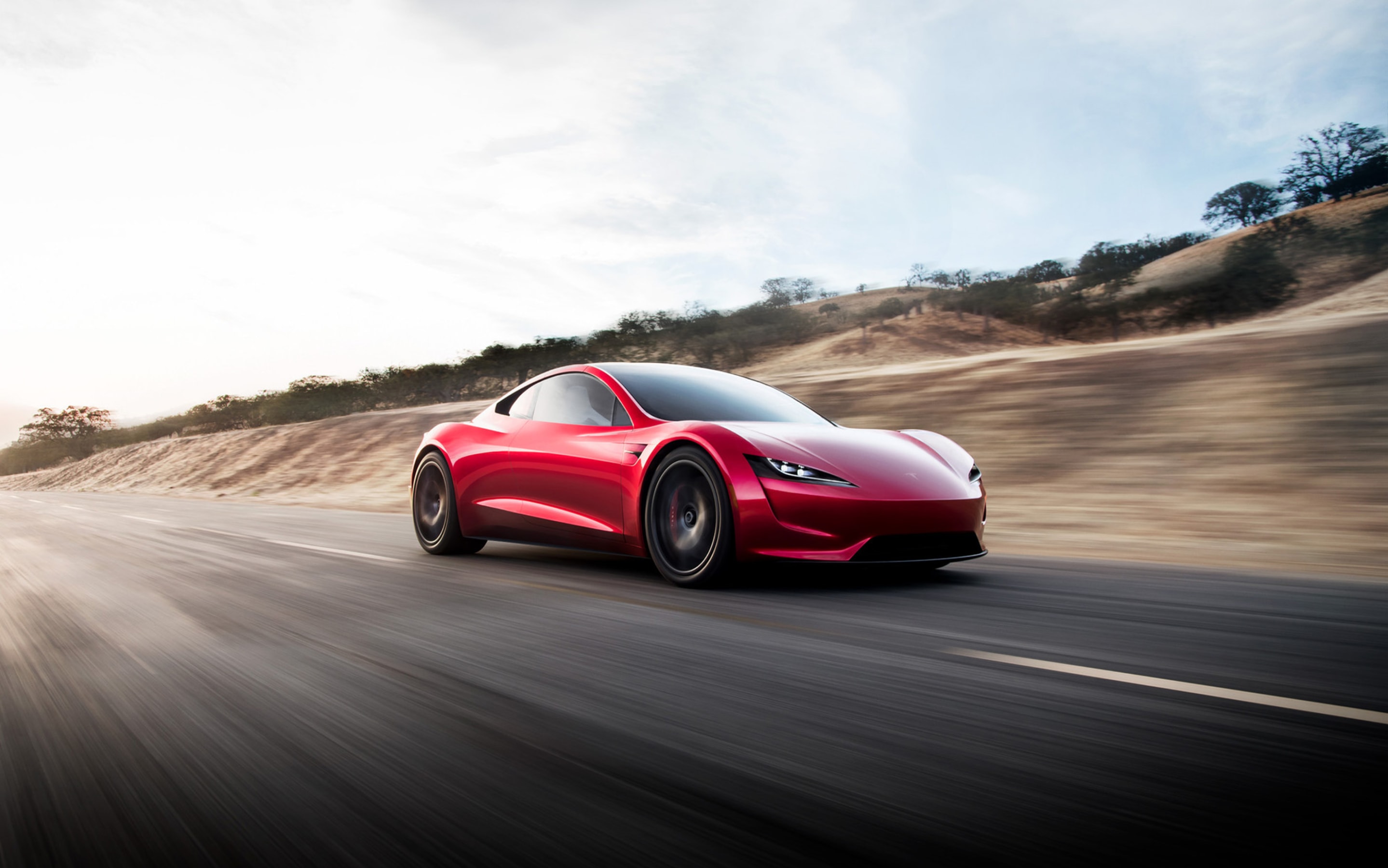
Performance, Thrust and Rocket are not interchangeable
Tesla describes Performance as a road-ready, two-seat configuration with active aerodynamics and a multi-mode suction system. Thrust adds acceleration thrusters to a two-seat, race-ready configuration and is described as a limited release. Rocket is an invite-only, single-seat configuration with a full flight system. These are Tesla’s product descriptions, not our certification of readiness. [2][3]
The qualification attached to Rocket is crucial: Tesla says it is not approved for public road use. A video of a vehicle moving through the air does not make that configuration legal to drive on a US street. Nor does the phrase ‘road ready’ establish that the eventual Performance vehicle has completed every required production and compliance milestone. [2]
Readers should also examine Tesla’s footnotes rather than treating every feature on the page as standard equipment. The page limits certain capabilities to Rocket and says the indicated features and specifications reflect the optional Thrust augment. A base reservation should not be interpreted as purchasing every capability shown in the reveal.
Why suction-generated downforce is a bigger idea than another motor
A conventional aerodynamic wing creates downforce as air moves around the car. Its effect depends on speed, shape and airflow. A powered fan system takes a different approach: it removes air from beneath the vehicle, producing a pressure difference that pushes the car toward the surface. In principle, that can produce downforce even when the car is moving slowly or standing still.
Tesla says its multi-mode fan and ground-sealing system can generate enough suction to hold the vehicle upside down when stationary. That is a manufacturer claim. The reported reveal demonstrated striking behavior on a controlled ramp, but it did not provide a complete independent account of sealing performance on rough pavement, debris ingestion, energy consumption, noise or failure behavior. [1][2]
The practical engineering challenge is maintaining the useful pressure difference while the car moves over an imperfect surface. Road clearance, suspension movement and air leakage all matter. A system that works on a prepared demonstration surface still needs evaluation over bumps, standing water, damaged pavement and the conditions its intended operating mode permits.
There is a potentially meaningful payoff: more available traction at lower speeds and more control over the balance between downforce and drag. But the value depends on dependable operation, not merely maximum suction. Independent track testing should examine repeated laps and consistent handling, not just one visually spectacular maneuver.
Thrusters change the traction problem—and add a different set of questions
Ordinary acceleration starts with force passing through the tires to the road. Electric motors can deliver torque quickly, but the tires still limit how much force the car can use. More motor output alone does not guarantee a proportionately quicker launch. A cold-gas thruster can supply force through expelled gas rather than through tire contact, which explains why Tesla is exploring it for extraordinary acceleration and vehicle movement.
Tesla says the system uses electrically actuated cold-gas thrusters and describes different placements and capabilities for its optional configurations. Cold-gas propulsion is not the same thing as burning rocket fuel inside a car. Even so, pressure storage, controlled release, usable operating duration and safe behavior near people are consequential engineering questions. The sources reviewed here do not establish the final pressure-system specifications or replenishment procedure. [2]
The central test is repeatability. How many enhanced launches can the system perform before it needs replenishment? What changes when the battery, pressure supply or tires are no longer in ideal condition? What happens when a component fails? Until production documentation and independent testing answer those questions, a sub-one-second headline remains an incomplete description of ownership.
Flight adds still more questions about operating areas, controls and approval. This article does not assign a regulatory classification to the Rocket configuration or claim that it has permission to fly in US airspace. Tesla’s explicit public-road restriction is already enough to rule out presenting it as an ordinary street-car feature.
Range, speed and a fast launch measure different things
It is tempting to combine maximum range, maximum speed and minimum acceleration time into a single picture of performance. That picture is misleading. A range figure describes a particular driving cycle or set of conditions. A maximum-speed run and repeated full-power launches put very different demands on the battery, motors, cooling and tires.
At high speeds, aerodynamic resistance becomes increasingly important. A low-drag mode can help efficiency; a high-downforce mode may prioritize grip instead. A larger battery can store more energy, but it can also add mass. The most useful car is not necessarily the one with the largest number in each column—it is the one whose compromises suit the driving the owner actually does.
For US shoppers, an EPA range rating and documented charging performance would be more actionable than extrapolating from the reveal. We have not established a certified range, a final charging curve, battery capacity or road-trip charging time for the redesigned Roadster from the sources cited here. Network compatibility and the charging connector should also be confirmed for the delivered configuration, not assumed from other Tesla models.
Likewise, a credible acceleration comparison should state whether rollout is excluded, identify the tires and surface, and explain the use of any thruster upgrade. Comparing an assisted demonstration to an independently tested road car without those details would blur the very engineering distinction that makes the Roadster interesting.
The production target is 2028—not a delivery guarantee
Reuters attributes the 2028 production plan to Tesla’s October reveal. The project had originally been associated with 2020 deliveries, and subsequent schedules moved. In November 2025, TechCrunch reported Musk’s plan for an April 1, 2026 production-version reveal followed by production 12–18 months later. The October 2026 reveal and newly stated 2028 plan therefore belong in a history of changing targets, not an uninterrupted schedule. [1][7]
Past delays do not prove that the revised car cannot be built. They do mean that readers should treat a date as a management target until there is evidence of manufacturing readiness. Final design validation, suppliers, tooling, safety compliance, service procedures and customer allocation are less theatrical than a reveal but more useful for judging whether deliveries are approaching.
Starting production is also not identical to delivering a particular reservation holder’s car. Configuration, market, allocation and production volume can affect timing. Tesla’s reservation agreement explicitly says it cannot guarantee when—or whether—a reserved vehicle will be delivered. That is a stronger qualification than a headline production year. [8]
What a US reservation buys—and what it does not
The US reservation page checked for this article shows $5,000 due today and $45,000 due within ten days for the displayed base reservation, totaling $50,000. It says the reservation is not final until payment is received and can be cancelled if payment is not completed within ten days. Reuters separately reported a $250,000 deposit for the Thrust version after the reveal. Buyers must check the amount and terms attached to their selected configuration rather than treating the base page as universal. [1][3]
A deposit is not the vehicle’s selling price. Reuters reported that Tesla did not specify target purchase prices at the October event. The historical $200,000 base price is therefore not a verified final price for the redesign. Tesla’s reservation agreement says a displayed estimated purchase price is not final, and a reservation establishes approximate priority rather than constituting a vehicle order. [1][8]
Before sending money, read the actual agreement presented at checkout, including cancellation and refund provisions. Keep a copy of the terms and payment confirmation. The live page labels the initial amount fully refundable but also contains a warning about refunds for modifications; this article does not substitute a blanket refund promise for the agreement a buyer accepts. [3]
Potential owners should eventually seek configuration-specific answers on warranty coverage, pressure-system maintenance, battery servicing, insurance, tire replacement, storage and permitted use. Those costs could matter substantially for a low-volume car with specialized systems. We do not provide estimates because the cited sources do not establish them.
Why the Roadster matters even if it remains a low-volume car
The strongest business case is as a halo vehicle: a product that demonstrates engineering ambition and strengthens the brand rather than supplying most of its revenue. Reuters notes that Musk previously described the Roadster as financially small relative to Tesla’s broader operation. An impressive reveal may attract attention without changing the fundamentals of vehicle margins, cash flow or manufacturing economics. [1]
Our analysis is that the most consequential innovation would be a dependable integration of active downforce, propulsion assistance and driver control—not the spectacle by itself. If those systems prove repeatable and useful, the Roadster could broaden the discussion of electric performance beyond straight-line acceleration. That is a conditional assessment, not a forecast of sales or technology transfer to cheaper models.
The original Roadster persuaded people by becoming a real car. Its successor ultimately faces the same test. For enthusiasts, the October redesign is a genuine development worth examining. For prospective buyers, the right next milestone is less glamorous: a clearly specified, legally usable production vehicle with a price, service plan and performance that independent testers can reproduce.
What the evidence still cannot settle
The cited material does not establish a guaranteed customer delivery date, final purchase price, certified EPA range, independently verified production-car acceleration, production volume or complete ownership costs. Tesla’s promotional page and reveal describe intended capabilities; Reuters provides dated reporting; historical sources explain how the project reached this point. None is a substitute for testing the final vehicle.
The Roadster story should be updated when Tesla publishes final configuration specifications, production milestones, compliance documentation or customer-delivery evidence—and when independent testing becomes available. Until then, distinguish the car demonstrated, the car promised and the car a customer can actually receive.